
When deciding to make your home eco-friendly, the first instinct is often to change light bulbs or sort waste. These actions matter, but they do not address what has the most significant impact on a home’s footprint: the building envelope, the materials that compose it, and how it manages heat, both in summer and winter.
Thermal resilience in summer: the true test of an ecological house
There is a lot of talk about insulation for winter. Summer comfort, however, remains underestimated in most renovation projects. Recent feedback shows that eco-built homes maintain a stable indoor temperature around 23 degrees during heatwaves, without air conditioning.
This result relies on three combined levers: insulation made from bio-sourced materials (wood fiber, cellulose wadding) that offers good thermal lag, properly sized double-flow ventilation, and a careful air tightness that limits thermal bridges. Without these three elements combined, air conditioning becomes necessary, and energy bills start to rise again.
The occupants of these homes highlight an unexpected benefit: the complete elimination of air conditioning as the main return on investment, more than heating savings. This is a change in perspective. Renovation is no longer just about reducing consumption, but about gaining comfort without active equipment.
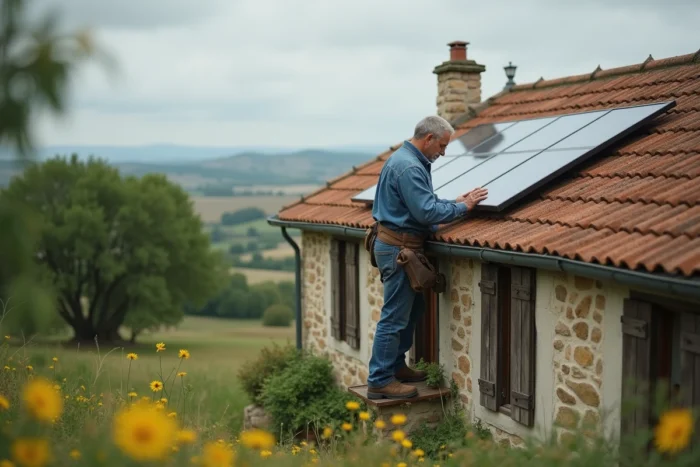
For those looking to realize this type of project, resources like Habite Ta Terre! allow exploration of construction and ecological renovation sectors adapted to each geographical context.
Low-carbon materials and sustainable furniture: decide before buying
The choice of construction materials determines the lifespan of the project and its environmental impact over several decades. While competitors list quick eco-actions, the real decision takes place at the time of ordering: wood, raw earth, hemp, local stone. Each sector has its supply constraints and technical limits depending on the region.
For furniture and interior decoration, the logic is the same. Assess each piece of furniture based on its durability, reparability, and impacts on indoor air quality before purchase to avoid frequent replacements and emissions of volatile organic compounds. A solid wood piece sourced from sustainably managed forests does not have the same lifecycle as a particle board panel covered with melamine.
Here are some concrete criteria to guide your choices of materials and furniture:
- Favor local raw materials (wood, earth, stone) to limit transport and support regional ecological construction sectors
- Check for recognized environmental labels on decoration products and furniture (European eco-label, NF Environment)
- Request from the manufacturer or retailer information on the reparability of each piece of furniture, not just its price
- Prefer finishes based on natural oils or plant waxes over synthetic varnishes that degrade indoor air quality
Energy renovation: where to start without getting overwhelmed
Faced with the list of possible works, it is easy to get overwhelmed. Attic insulation, window replacement, boiler change: each item promises energy savings, but not all have the same impact depending on the building’s condition.
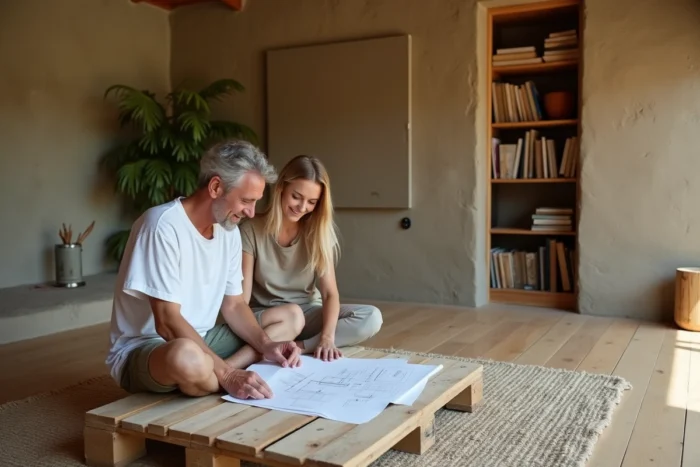
Starting with a thermal audit of the home allows prioritizing interventions. In most cases, insulating the envelope (walls, roof, ground floor) yields the most significant gains. Replacing a boiler without addressing thermal leaks amounts to heating the outside with a more efficient system.
Feedback varies on this point, but one observation often recurs: households that insulated first and then changed their heating system notice a significantly greater reduction in consumption than those who did the opposite.
Ventilation and air tightness, the blind spots of renovation
Many renovation projects neglect ventilation. A well-insulated but poorly ventilated house accumulates moisture, degrades air quality, and promotes mold. Double-flow ventilation recovers heat from outgoing air to preheat incoming air, reducing losses without sacrificing air renewal.
Air tightness, on the other hand, is addressed during construction. Each duct passage, each joinery-wall junction represents a potential leak point. In this area, the quality of implementation is as important as the choice of material.
Cleaning products and water: simple levers with a strong impact
An eco-friendly home is not limited to its envelope. The products used daily for maintenance directly influence the indoor environment and wastewater discharges. Replacing industrial cleaners with alternatives based on black soap, white vinegar, and baking soda reduces exposure to toxic substances without loss of effectiveness.
On the water side, savings come from low-flow fixtures (aerators, water-saving showerheads) and concrete habits:
- Install a rainwater collector for garden watering or outdoor cleaning
- Set the water heater temperature between 55 and 60 degrees to limit scaling and consumption
- Always turn off the water during soaping, brushing, or partial rinsing
Each individual saving measure may seem modest, but their cumulative effect transforms the household’s annual energy balance. The shift towards sustainable living does not happen overnight. It is built step by step, starting with interventions whose impact is measurable and costs are manageable.