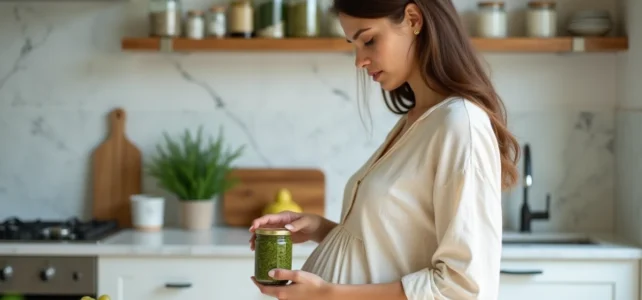
Pesto raises three distinct questions during pregnancy: the microbiological status of parmesan, the potential contamination of raw basil, and the difference in risk between industrial sauce and homemade preparation. We detail each point here to allow future mothers to make an informed choice about consuming this sauce.
Parmesan in pesto during pregnancy: a raw milk cheese that is an exception
Parmesan (Parmigiano Reggiano) is made from raw milk. This detail often alarms pregnant women, who are accustomed to the advice to avoid raw milk cheeses. The microbiological reality is more nuanced.
Parmigiano Reggiano is a hard cheese with a long aging process. This lengthy maturation significantly reduces the water activity in the cheese, making the survival of Listeria monocytogenes much less likely than in a soft cheese. The recommendations from Santé publique France explicitly distinguish hard cheeses, which are generally considered to be lower risk than soft raw milk cheeses.
However, we recommend checking the ingredient list of the pesto used. Some brands replace parmesan with soft cheeses or less aged blends. A pesto containing real long-aged Parmigiano Reggiano presents a significantly lower listeria risk than a pesto with soft cheese.
To better understand the risks of pesto during pregnancy, the distinction between types of cheeses is the first criterion to master.
Industrial or homemade pesto: microbiological criteria to know
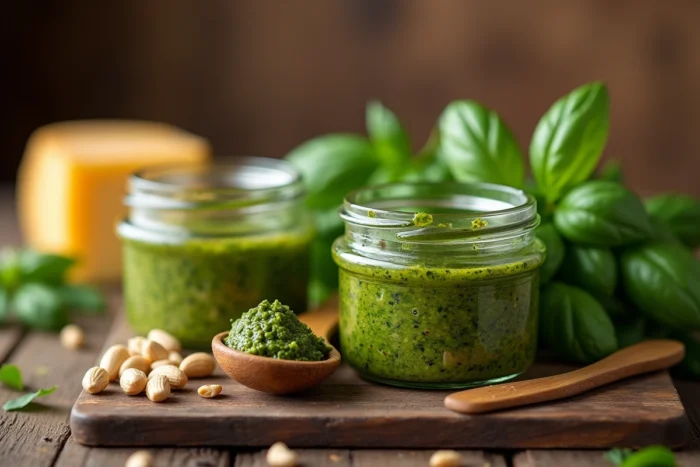
Pestos sold in supermarkets do not present the same risk profile as those prepared at home. The difference lies in a precise regulatory framework.
Manufacturers of ready-to-use sauces must comply with the EU Regulation No. 2073/2005 concerning microbiological criteria for foodstuffs. This text imposes strict thresholds for Listeria monocytogenes in products placed on the market. An industrial pesto, pasteurized or sterilized, therefore undergoes a control process that homemade preparation does not guarantee.
In home cooking, fresh basil is the weak link. The leaves can carry residues of soil contaminated by Toxoplasma gondii, a particularly concrete risk for pregnant women who are not immune to toxoplasmosis. A cursory wash under running water is not always sufficient to eliminate the oocysts.
- Wash each basil leaf individually under a stream of water, then soak them for a few minutes in vinegar water before drying
- Use pine nuts from a sealed bag rather than bulk pine nuts, which are more exposed to cross-contamination in stores
- Consume homemade pesto on the same day it is prepared or freeze it immediately to block bacterial growth
- Prefer long-aged Parmigiano Reggiano rather than generic grated cheese whose exact nature remains unclear
An unopened jar of industrial pesto, stored according to the manufacturer’s instructions, offers superior microbiological safety compared to a homemade preparation stored for several days in the refrigerator.
Raw basil and toxoplasmosis during pregnancy
Toxoplasmosis is transmitted by ingesting oocysts present in soil, on poorly washed vegetables, or in raw meats. Raw basil, the main ingredient in pesto alla genovese, falls into this category of at-risk vegetables.
For pregnant women who are seronegative for toxoplasmosis, any vegetable consumed raw must be washed with particular attention. Fresh basil bought in bunches at markets or garden centers presents a higher risk than pot-grown basil cultivated off the ground, as direct contact with soil contaminated by cat feces is the main vector.
Cooking destroys Toxoplasma oocysts. Adding pesto at the end of cooking to hot pasta does not constitute cooking in the microbiological sense. The surface temperature of the pasta drops quickly and does not maintain the threshold necessary to destroy the parasite. We observe that this nuance escapes most public food guides.
Pesto and foods to avoid during pregnancy: composition pitfalls

Beyond basil and parmesan, other ingredients in pesto deserve attention. Pine nuts may contain traces of cadmium, a heavy metal whose accumulation is monitored in pregnant women. Pine nuts from Asian sources are more frequently flagged in health alerts than those from Mediterranean sources.
Raw garlic, another classic component, does not pose a specific infectious risk during pregnancy. Its consumption in normal amounts in pesto does not present any documented contraindication.
Olive oil, the lipid base of pesto, is a safe and recommended food during pregnancy. It requires no special precautions.
- Check the origin of the pine nuts on the packaging if you are preparing your homemade pesto
- Avoid artisanal pestos bought at markets without clear labeling, as the traceability of ingredients and the cold chain are less controlled
- Pestos made with freeze-dried or dehydrated basil present an almost zero risk of toxoplasmosis compared to fresh raw basil
Consuming pesto during pregnancy is entirely possible with a few targeted precautions. Industrial pasteurized pesto made with aged Parmigiano Reggiano represents the safest option. For fans of homemade, thorough washing of basil and immediate consumption after preparation significantly reduce risks. The real danger does not come from pesto itself, but from a lack of knowledge about serological status (toxoplasmosis) and inappropriate storage habits.