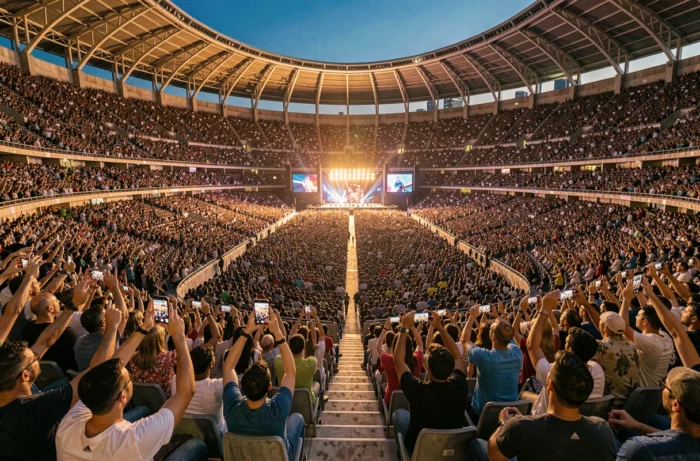
The Stade de France in Saint-Denis has a capacity that changes with every concert. The stage, its structures and the sections closed off in the stands affect the actual number of tickets available for sale. Understanding how this works can help you avoid paying for a category based on an appealing name without checking what it includes for the show you plan to attend.
Why the Stade de France’s concert capacity varies from one show to another
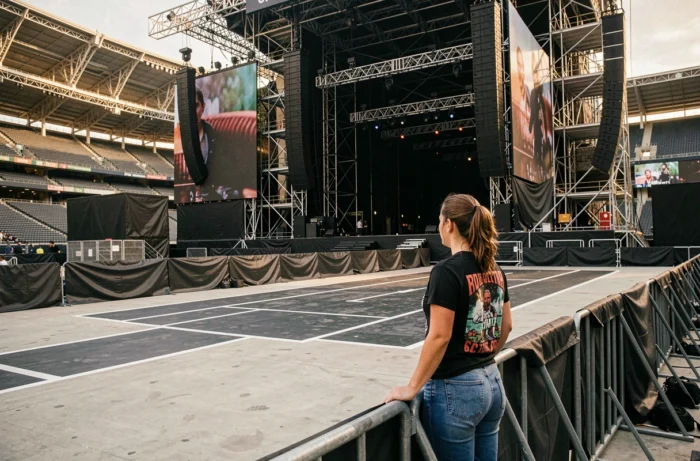
In its sports configuration, the venue has a fixed number of seats spread across three tiers of stands. For concerts, that total decreases: the stage takes up part of the pitch and may block off several sections of the stands behind it or to either side. Giant screens, sound towers and walkways create additional obstructed-view areas.
A capacity figure given without specifying the stage setup therefore does not reflect the number of seats actually available. Two artists performing in the same year may have very different capacities, depending on the size of their stage setup. The reliable information is in the seating plan published by the organizer for each date, not in a generic figure.
To better understand the Stade de France’s concert capacity and seating categories, check the event-specific plan rather than relying on a standard layout.

Stade de France seating categories: names that vary from one concert to another
Ticket labels such as Category 1, Gold Circle, Golden Pit, General Admission and Upper Tier do not correspond to a universal layout. From one show to another, the same label can refer to different locations. A “Gold Circle” section facing the stage at one concert may be off to the side at another, simply because the stage has been repositioned.
Standing area and pitch: standing or seated, depending on the show
The standing area, located on the pitch closest to the stage, is often standing-room only. This is not always the case. Some concerts have numbered seats on the pitch, turning the standing area into a seated floor section. The ticket description and concert plan are the only reliable ways to find out whether your spot is standing or seated.
Lower, middle and upper tiers
The Stade de France stands are divided into three levels. The lower tier is close to the stage, but side sections may have a limited viewing angle. The middle tier offers a combination of elevation and moderate distance. The upper tier, which is the least expensive, provides a panoramic view of the entire setup, at the cost of being noticeably farther away.
A side seat close to the stage is not always an advantage. Stage structures, speaker towers or screens may block part of the show. Before buying, checking the section number and any restricted-view notices on the plan is more useful than relying on the category name alone.
Choose your ticket based on what matters most: proximity, comfort or an overall view
There is no such thing as “the best category” in the abstract at the Stade de France. The right ticket depends on what the spectator values most. Four criteria can help you decide using the exact concert plan.
- Being close to the artist: the standing area or the first rows of the lower tier facing the stage. The trade-offs include standing for a long time in the standing area, louder sound and the risk of crowd surges at some concerts.
- An overall view of the show: the middle tier facing the stage offers a good balance between distance and a clear view of the lighting and stage design. It is often the best choice visually for productions with elaborate setups.
- Comfort and a guaranteed seat: the upper tier or pitch sections with numbered seats, when available. Prices are generally lower, and the physical strain is limited.
- Sensory needs or accessibility: some concerts at the Stade de France offer dedicated options, such as adapted sensory rooms. Accessibility needs may affect your ticket choice and on-site experience. Details are available on the organizer’s page or the stadium website.
How to read a Stade de France concert seating plan correctly
The seating plan published by the ticket seller contains several details to check before completing your purchase.
Sections are numbered and positioned in relation to the stage. A section with a high number is not necessarily far away: the numbering follows the perimeter of the venue, not the distance from the stage. Checking the section’s exact location on the plan is the only reliable way to tell.
Shaded or crossed-out areas indicate seats blocked off by the stage setup. These vary depending on the size of the stage and whether a walkway extends into the audience. A concert seating plan almost never looks like the stadium’s sports layout.
Some resale platforms display a generic plan that does not match the actual concert setup. Comparing the reseller’s plan with the one published by the official organizer can help you avoid an unpleasant surprise about your seat’s location.
Accessibility and special options at the Stade de France
The Stade de France has spaces reserved for people with reduced mobility, located on different levels of the stands. For some concerts, additional facilities are available, such as sensory rooms designed for spectators with specific needs (sound sensitivity, autism spectrum disorders).
These seats are not always listed on standard ticketing platforms. They may need to be booked directly through the stadium or organizer. Checking availability as soon as tickets go on sale can help you avoid finding out too late that they have sold out.
At the Stade de France, the best seat is not the one with the most prestigious name. It is the one whose section, level and orientation match what the spectator actually wants from the concert—with the seating plan in hand.