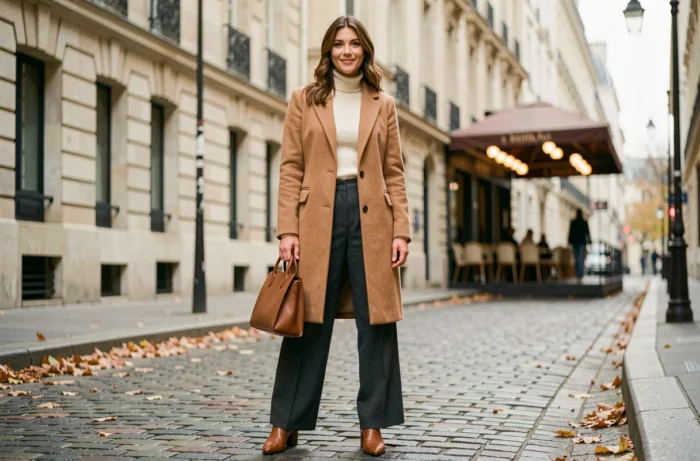
Between the spring-summer 2027 fashion shows in Paris and the autumn-winter collections settling into stores, this year’s fashion trends are shaping a wardrobe where sustainability and stylistic assertion converge. What are the concrete criteria that distinguish a truly trendy piece from a mere seasonal effect?
Digital Product Passport and Circular Fashion: What Changes Textile Purchasing
The European regulatory framework is redefining what can be expected from a garment even before trying it on. The digital product passport, with the delegated textile act announced for 2027, will make accessible the composition, origin, durability, care instructions, repair, and end-of-life guidelines for a piece.
This transparency alters the stylistic reading grid. A coat or a dress will no longer be judged solely on its cut or color, but also on the verifiability of its manufacturing information. European distributors are already investing in repair, resale, and recycling partnerships, according to EuroCommerce.
The current fashion trends documented on modefashion.net reflect this evolution: pieces designed to last several seasons are taking precedence over purely seasonal purchases.
| Purchase Criteria | Classic Seasonal Purchase | Circular Fashion Purchase |
|---|---|---|
| Target Lifespan | One season | Several years |
| Repairability | Rarely considered | Integrated from design |
| Material Traceability | Minimal label | Digital passport (composition, origin, care) |
| Resale / Second Hand | Low residual value | Value maintained through robustness |
| Environmental Claims | Often unverified | Regulated by European law |

Autumn-Winter 2026-2027 Trends: Silhouettes Seen on the Runways
The autumn-winter 2026-2027 shows have established several clear stylistic directions.
Statement Coats and Layering
The coat becomes the central piece of the winter wardrobe. Designers are betting on bold volumes and architectural cuts that transform a basic into a signature. Layering (sweater under jacket, jacket under coat) remains a strong stylistic lever, but the trend leans towards cleaner associations than the massive stacks of previous seasons.
Color Palette: Red and Black in Tension
Red asserts itself as the key color of the season, worn in a total look or as a standout piece against a black base. Black, meanwhile, does not retreat: it reaffirms itself in varied textures (leather, dense knit, matte satin). The red-black opposition structures a large part of the proposals seen at Paris Fashion Week.
Pale shades and pastels complete the palette for spring-summer 2027, but for the cold season, the dominance of strong colors remains clear.
Second Hand and Vintage: A Regulatory Advantage for Sustainable Style
The extended producer responsibility (EPR textile) creates a favorable context for pieces already in circulation. Robust, repairable clothing present in reuse circuits enjoys a competitive advantage over disposable collections.
For a unique style this year, vintage offers three concrete levers:
- Cuts that are unavailable in current ready-to-wear, particularly the structured suits of the 1990s making a comeback in wardrobes through resale
- A material often denser than comparable new equivalents, directly aligning with the trend for statement coats
- A paradoxically clearer traceability: a garment that has survived ten years proves its durability better than a label

Checkered Prints, Fluid Dresses, and Women’s Pieces to Watch in Spring
Paris Fashion Week for spring-summer 2027 highlighted skirts in all their forms and anti-heatwave harem pants, according to Gala. Meanwhile, checkered prints are returning in women’s collections, this time worn on casual pieces (loose shirts, midi skirts) rather than classic suits.
The dress remains a staple of the seasonal wardrobe. The styles spotted on the runways play on the fluidity of materials and transparency effects, confirming a minimalism that emphasizes texture over the accumulation of details. The pastel colors announced for spring contrast with the autumn palette, but the common thread remains the same: readable, wearable pieces, where the quality of craftsmanship becomes a style argument in its own right.
Functional waterproofing is also making a notable breakthrough. Brands are integrating technical finishes into urban silhouettes, blurring the line between outdoor fashion and city wear.
Criteria for Identifying a Trendy Sustainable Piece
- Check the exact composition on the label or the future digital passport, ensuring that the main fibers are identified
- Favor cuts that work beyond one season: a structured coat, a solid fluid dress, straight-cut jeans
- Evaluate the possibility of resale or repair before purchase, which naturally guides towards brands committed to circular fashion
- Beware of vague ecological claims: European regulations now make unproven assertions risky for brands
This year’s fashion trends converge on a common point: the piece that lasts becomes the piece that matters. The digital product passport, the rise of second hand, and the regulation of ecological claims are shaping a wardrobe where style is also measured by the durability of what we wear.