Flunch, Courtepaille, Hippopotamus, Léon de Bruxelles: these names evoke specific memories for millions of French people. Sunday family meals, a stop on the holiday route, a noisy meal tray in a commercial area. Yet, most of these brands have gone through judicial recoveries, series of closures, or successive buyouts. Their legacy is not limited to nostalgia. It can be seen in the buildings, the recipes, the concepts that survive them.
Repurposing former restaurant chain locations: what happens to the buildings
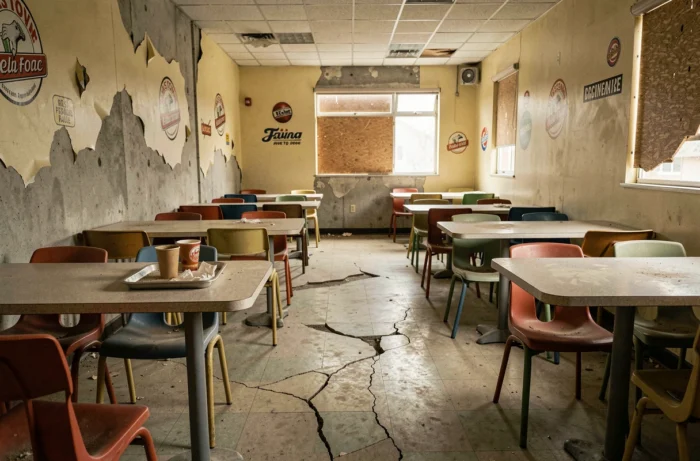
Have you ever noticed an old Courtepaille transformed into an independent pizzeria on the side of a national road? This phenomenon has accelerated in recent years. When a chain closes a location, the space doesn’t stay empty for long.
Buildings located in commercial areas or on the outskirts of towns retain a major asset: their location. Wide parking lots, direct road access, space suitable for dining. Independent buyers or new brands move in, taking advantage of an already established business.
The most visible case concerns former roadside restaurants. Where there used to be a restaurant chain that has disappeared in France, you can sometimes find a kebab shop, an Asian restaurant, or an artisanal burger concept. The structure almost always survives the brand. Professional kitchens, extraction hoods, cold rooms are taken over as they are by the new manager.
This real estate recycling is a concrete legacy, even if it goes unnoticed. It shapes the dining offer in urban outskirts and transit areas.
Inherited dining concepts: from French grill to premium rebranding
The most enduring legacy of these chains is not found in their buildings. It lies in their concepts. The popular steakhouse, the mussels and fries brasserie, the all-you-can-eat buffet: these formats barely existed in France before brands like Buffalo Grill, Léon de Bruxelles, or Flunch popularized them.
Buffalo Grill and the survival of the French grill
Buffalo Grill exemplifies this transformation logic well. The brand has not disappeared, but it has profoundly changed its image. The caricatured western decor has given way to a more sober positioning, focused on French-sourced meat and wood-fired grilling. The old concept still lives on in the menu, but the setting has changed.
Sector analyses of meat restaurants show that this type of repositioning has become common. Rather than closing, surviving chains invest in rebranding that retains the founding codes (grill, friendliness, affordable prices) while modernizing the experience.
Hippopotamus and the premium steakhouse shift
Hippopotamus has followed a similar path. The brand, which had significantly reduced its presence in inner Paris, launched a new concept called “steakhouse à la française.” The withdrawal from city centers is accompanied by a redeployment to the outskirts, where land is cheaper and family clientele remains loyal to the format.
A reopening under this new concept has been announced in Béziers for 2026. The principle: maintain the DNA (grilled meat, table service, brasserie atmosphere) while adding local products and a streamlined menu.
Skills of former chefs and cooks from restaurant chains
People who worked in these chains are rarely talked about. Thousands of cooks, managers, and servers have been trained in the kitchens of Flunch, Courtepaille, or Buffalo Grill. Their professional journey constitutes an invisible but real legacy.
- Chefs who passed through these chains have since opened their own restaurants, applying flow management and recipe standardization methods learned in the restaurant group.
- Former dining room managers have joined collective catering or event catering companies, bringing with them a culture of fast service and family hospitality.
- Iconic recipes (Buffalo sauce, Flunch carbonnade, Léon’s mussels) continue to circulate on cooking forums and social media, often recreated by nostalgic former employees.
The human legacy of these chains permeates the entire French restaurant scene, far beyond their original brands.
Dining in France: why nostalgia alone is not enough to save a brand
Why have these chains declined despite their customers’ attachment? The answer lies in two words: economic model. Inflation on raw materials, rising energy costs, and declining household purchasing power have hit hard on brands whose promise relied on a tight quality-price ratio.
When the average ticket for a chain meal approaches that of an independent restaurant, the customer has no reason to choose the chain. The concept alone does not protect. A solid financial management and the ability to renegotiate commercial leases, often very high in commercial areas, are also necessary.
- Flunch has been placed in judicial recovery several times, a victim of a buffet concept that has become difficult to make profitable after Covid.
- Courtepaille has changed owners several times, each buyer trying to revive the brand without achieving lasting success.
- Léon de Bruxelles has seen its network shrink, going from several dozen establishments to a handful of survivors.
Nostalgia generates attachment, not revenue. The chains that survive are those that have managed to transform their legacy into a viable project, not those that relied solely on the emotional loyalty of their former clientele.
What remains of these brands can be seen in the repurposed buildings, the reinvented concepts, and the skills passed on. Their disappearance is not an erasure. It is a reconfiguration of French dining, less visible than a spectacular closure, but just as structuring for the sector.