Sending money abroad via Western Union involves choosing between several payment methods, each with its own fees and timelines. Comparing these options before initiating a transfer can help avoid sometimes significant additional costs. This guide reviews the factors that influence the actual cost of a transfer and the regulatory points of caution to be aware of.
Exchange rates and hidden fees: what affects the real cost of a Western Union transfer
The amount displayed at the time of sending does not always reflect the total cost. Two mechanisms combine: the service fees charged by Western Union, and the margin applied to the exchange rate compared to the interbank rate.
On the official website, Western Union offers the ability to instantly check transfer fees and exchange rates before confirming a transaction. This transparency remains partial, as the margin on the exchange rate varies depending on the destination country. A transfer to a West African country will not show the same conversion as a transfer to the United Kingdom, even for the same amount.
To make a money transfer via Western Union without unpleasant surprises, you need to add the displayed fees and the difference between the proposed rate and the interbank rate of the day. This sum represents the true cost of the operation.
Payment and receipt methods: comparison table
The choice of payment method at the time of sending, combined with the recipient’s method of receipt, determines both the timeline and the fees. Here is a summary of the main combinations available from France.

| Payment method (sending) | Receipt method | Indicative timeline | Note |
|---|---|---|---|
| Credit/debit card | Cash pickup | Within minutes | Fees generally higher than a bank transfer |
| Bank card | Bank account transfer | Several business days | Depends on the destination country |
| Bank transfer | Cash pickup | Several business days | Fees often lower than with a card |
| Cash at agency | Cash pickup | Within minutes | ID required |
| Apple Pay / Google Pay | Cash pickup | Within minutes | Available via the mobile app |
Bank transfer payment is cheaper than card payment, but extends the timeline by several days. Conversely, cash payment at a point of sale allows for almost immediate pickup for the recipient, which explains why this method remains widely used for urgent transfers.
ID and KYC checks: what blocks transfers
The primary cause of delays or rejections of a transfer is not technical. It is a documentation issue. Western Union, like all payment service providers in Europe, applies identity verification (KYC) procedures that have significantly strengthened in recent years.
When sending in person or online, the following documents are systematically required:
- A valid ID (passport, national identity card, residence permit as applicable)
- The complete details of the recipient (first name, last name, country, and sometimes phone number)
- Proof of the source of funds for large amounts or frequent transfers
A misspelled name between sending and receiving is enough to block the operation. The recipient must present an ID whose name exactly matches that provided by the sender. This rigor applies to all points of sale worldwide.
New European anti-money laundering framework starting in 2027
The European Union adopted Regulation (EU) 2024/1624 in 2024, which creates a harmonized framework for anti-money laundering applicable from July 10, 2027. This text directly concerns money transfer providers like Western Union.
In practice, identity checks, transaction monitoring, and documentation requests will align and strengthen across all member states. Temporary blocks may already occur, even for modest amounts, when the transaction profile triggers an automatic alert.

Online, in-person, or via the app: which option to choose
Western Union offers three sending channels from France. Each serves a different purpose.
Online sending (website) allows you to prepare the transfer from home, compare fees based on the payment method, and track the operation in real time. It is the most suitable channel for planned transfers where timing is not critical.
The mobile app offers the same functionalities, with the option to pay via Apple Pay or Google Pay. It is suitable for regular transfers, as the recipient’s details remain saved.
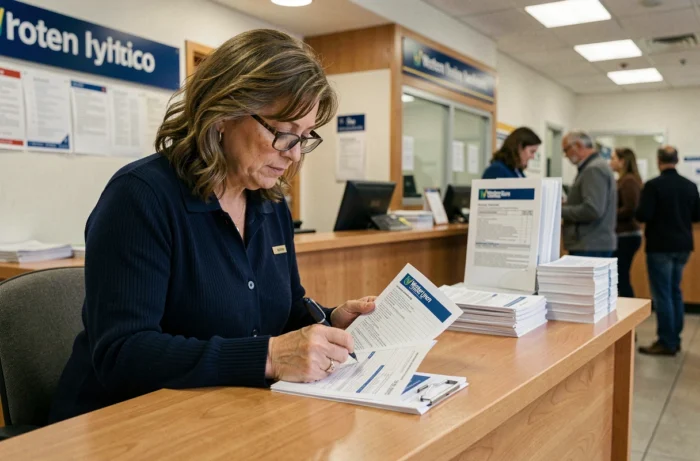
The physical agency remains the only channel for cash payments. For individuals without a bank account or card, it is the only option. However, it should be noted that the network of points of sale includes post offices and partner brands, not just dedicated agencies.
- Online or via the app: ideal for comparing fees, paying by card or transfer, tracking the transfer
- In-person: necessary for cash payment, immediate pickup for the recipient
- Possible combination: prepare the transfer online and then pay in cash at a point of sale within 24 hours
This last hybrid option, often unknown, allows you to take advantage of the online interface to check fees while maintaining the flexibility of cash payment.
The factor that changes the most from one transfer to another remains the destination country of the recipient. Fees, the exchange rate applied, and available receipt methods vary depending on the sending corridor. Simulating the transfer before confirming it, whether online or in-person, remains the only reliable way to obtain the exact cost of the operation.