A pus-filled bump on the face or body often triggers the reflex to squeeze it to get rid of it. However, the nature of this skin lesion – simple acne pustule, folliculitis, or boil – determines the course of action. Comparing the characteristics of each type of pus-filled bump allows for tailored care and helps avoid actions that worsen inflammation or promote bacterial spread.
Pus bump on the face: criteria to distinguish between pustule, folliculitis, and boil
Confusion between these three lesions is common. They share a visible commonality (pus under the skin), but their origin, depth, and potential for complications differ significantly.
| Criterion | Acne pustule | Superficial folliculitis | Boil |
|---|---|---|---|
| Origin | Clogged pore with sebum and bacteria | Superficial infection of the hair follicle | Deep infection of the hair follicle (Staphylococcus aureus) |
| Size | Several millimeters | Small, often clustered | Larger, hard and painful nodule |
| Pain | Mild to moderate | Moderate, burning sensation | Severe, pulsating, increases over a few days |
| Common location | Face, back, chest | Shaving areas, thighs, buttocks | Face, neck, back, thighs, buttocks |
| Risk of complication | Low (scarring if manipulated) | Low to moderate | High if poorly treated (self-contamination, rare septicemia) |
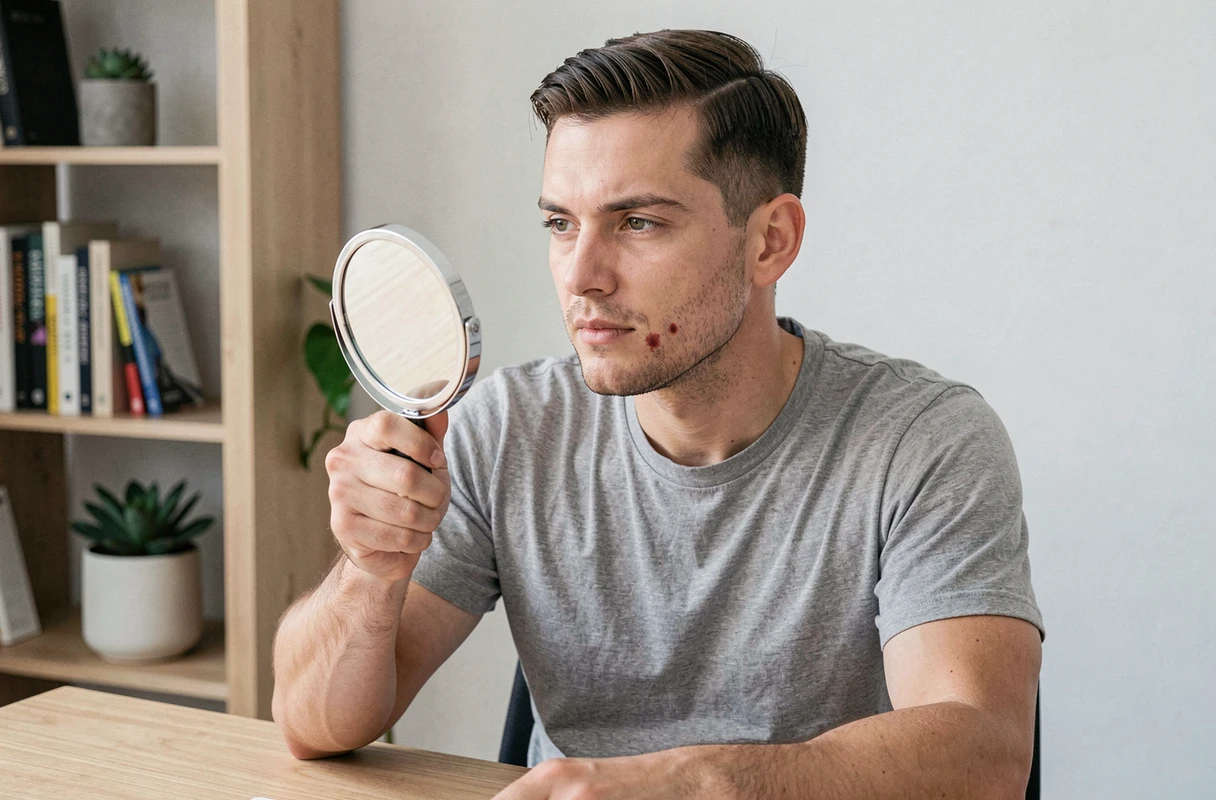
A boil is recognized by its red, hard, and painful nodule centered on a hair. A white spot then appears at its top before it spontaneously bursts. The acne pustule, on the other hand, remains superficial and does not form a deep crater when healing.
Location on the face increases the risk associated with the boil. Facial veins communicate with those of the skull, making any manipulation dangerous. A facial boil should not be squeezed.
Warm compress and local care: methods that accelerate natural drainage
The warm compress remains the most documented first-line measure to promote pus evacuation without traumatizing the skin. Knowing how to treat a pus bump relies primarily on this simple gesture, applicable to most pus-filled lesions.
Applying moist heat dilates local blood vessels, increases blood flow to the infected area, and softens the purulent content. Drainage then occurs naturally, without mechanical pressure on the lesion.
Warm compress protocol
- Soak a clean cloth in hot water (not boiling) and apply it to the lesion for about ten minutes, several times a day
- Wash hands before and after each application to limit bacterial transfer
- Use a different cloth for each application, or wash it at high temperature between uses
- Then apply a mild antiseptic to the area to reduce the bacterial load on the surface
The warm compress accelerates drainage without the risk of bacterial spread, provided that the bump is never squeezed. This approach works for both an acne pustule and a boil in the initial stage.
On the other hand, a boil that does not mature after several days of compresses, or that is accompanied by fever, requires a medical consultation. The doctor may perform a sterile incision or prescribe an appropriate antibiotic treatment.
Actions and products to avoid on a pus bump
Several popular practices worsen the condition of the lesion instead of resolving it. Dermatological sources strongly advise against them.
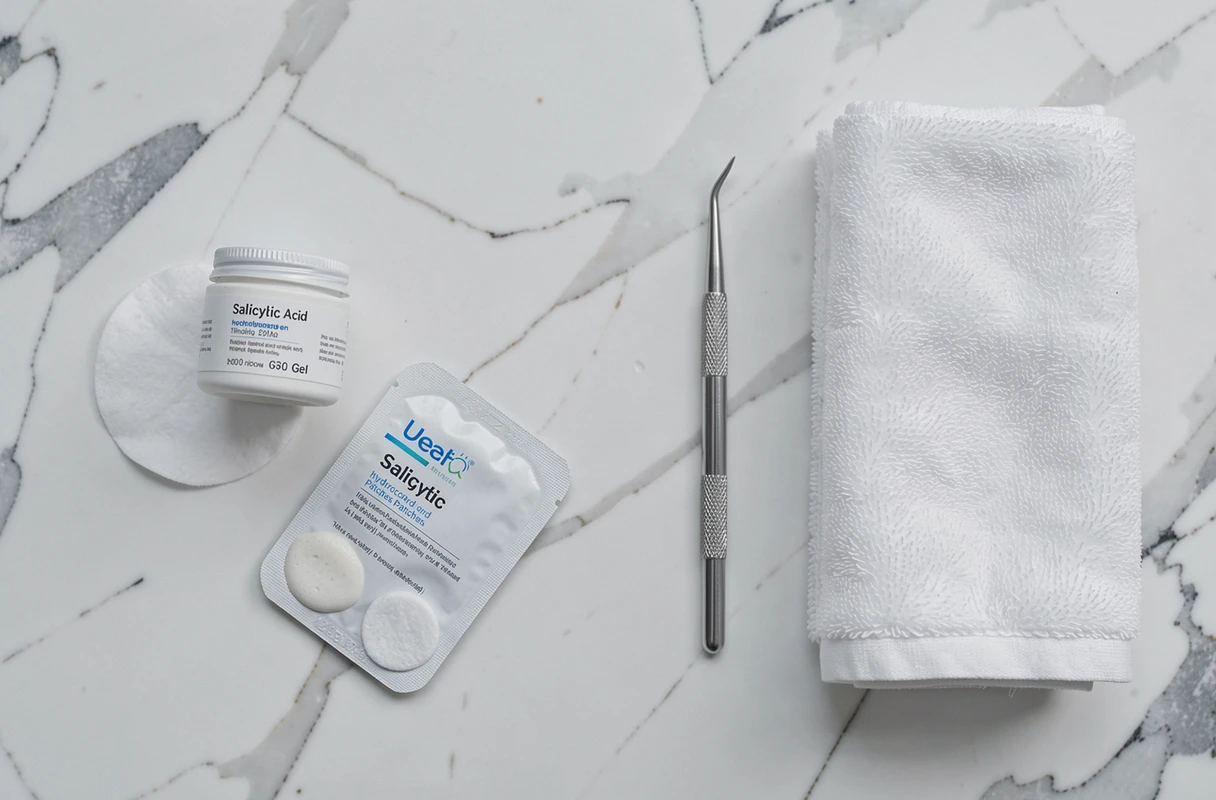
Toothpaste, often cited as a home remedy, contains irritating agents (menthol, fluoride, foaming agents) that dry out the surface but cause additional inflammation of the skin around the bump. Pure alcohol and undiluted essential oils produce the same effect: local irritation that delays healing.
Piercing a pus bump with a sharp object or applying direct pressure with fingers pushes some of the infected content into the deeper layers of the skin. This action can transform a superficial pustule into a more extensive inflammatory lesion or spread bacteria to neighboring follicles.
Hygiene around the lesion: an often-overlooked angle
Care is not limited to what is applied to the bump. The environment of the lesion plays a direct role in the speed of healing and the risk of recurrence.
- Change pillowcases regularly if the bump is located on the face or neck
- Wear loose cotton clothing on the affected areas (back, thighs, buttocks) to reduce friction
- Refrain from shaving in the affected area until the lesion has healed
- Apply a clean bandage if the bump rubs against clothing or an accessory
Repeated friction on a pus-filled lesion is a common aggravating factor that articles focused on “quick tips” rarely mention.
Boil on the face: when to consult a doctor
The majority of acne pustules and superficial folliculitis resolve within a few days with appropriate local care. The boil, however, follows a longer cycle and presents specific warning signals.
A consultation is necessary when the lesion exceeds the usual size of a bump, when pain increases day by day, or when a diffuse redness spreads around the initial nodule. Fever associated with a boil indicates a possible extension of the infection.
Recurrent boils (multiple episodes over a few months) warrant a more thorough evaluation. The doctor may check for nasal carriage of Staphylococcus aureus and propose a decolonization protocol to break the cycle of recurrences.
A boil located on the face, neck, or buttocks may leave a depressed scar after healing. Early treatment by a professional reduces this scarring risk.
Ultimately, treating a pus bump relies on two principles: correctly identifying the lesion to tailor the response, and resisting the reflex to manipulate it directly. The warm compress, rigorous hygiene around the area, and consulting at the slightest doubt about a boil remain the most reliable levers.