
In France, couples now finance between 50 and 70% of their wedding budget, according to 2026 industry data. This shift from the traditional model, where the bride’s family covered most of the costs, redistributes responsibilities and tensions. Organizing a successful wedding without stress first requires understanding this new financial landscape, which changes how to prioritize each item and negotiate with vendors.
Wedding Budget and the Gap Between Dream and Reality
A Vows & Venues study, reported by Gala in September 2026, shows that the ideal budget estimated by the French reaches five figures. This dream amount creates a sometimes harsh gap with the actual means of couples.
The direct consequence is a specific stress: fear of not meeting perceived standards on social media, guilt with each budget line overrun, tensions within the couple over concessions to be made. Identifying this mechanism allows for defusing it before it contaminates the entire preparation.
Structuring expenses by distinguishing non-negotiable items (venue, caterer) from adjustable items (floral decoration, stationery) remains the most reliable method to maintain control. When the couple is the main payer, they also gain decision-making freedom, a lever often underestimated to reduce the mental load related to organization on Mariage et Mariages of every logistical detail.

Reducing the Guest List: An Underutilized Stress-Relief Lever
Feedback from vendors compiled by Passion Mariage in 2026 confirms a clear trend: weddings with fewer guests generate less stress at every stage. Seating plan, accommodation, transportation, menu choices, entertainment: each logistical item becomes simpler when the number decreases.
This reduction is not just a budget issue. It changes the decision-making dynamic. With a tighter list, decisions are made faster, back-and-forth with vendors decreases, and the couple maintains a clear view of progress.
Concrete Criteria for Establishing the Guest List
- Apply the direct link rule: each invited person must have been in contact with at least one of the two spouses in the past twelve months
- Separate the list into two columns (non-negotiable / desirable) and only validate the second after obtaining quotes from the caterer and venue
- Anticipate the no-show rate, which hovers around 10 to 15% according to feedback from wedding planners
A well-thought-out wedding of 60 people allows for more room to enhance the ceremony, meal, and atmosphere than a reception for 150 guests managed in a hurry.
Timeline for Booking Vendors: What Really Holds Up the Process
Competitors often list the vendors to contact. They rarely mention the actual deadlines that block organization. During the summer season, venues and caterers are fully booked 12 to 18 months before the date. Highly sought-after photographers follow the same schedule.
Field feedback varies on this point for so-called “secondary” vendors (DJ, florist, officiant). Some couples book them a year in advance without difficulty, while others struggle to find a slot six months prior. The main variable remains the season and geographical location.
Booking Order That Limits Blockages
- Venue and caterer: to be secured first, as they determine the final date, capacity, and a major part of the budget
- Photographer and videographer: their schedules fill up early, and their style influences the overall atmosphere of the day
- Officiant, DJ, or musical group: to be scheduled once the venue and format of the ceremony are decided
- Florist, decorator, stationery: these items adapt more easily to the remaining calendar
Booking in this order prevents ending up with a confirmed florist but no venue available on the chosen date.
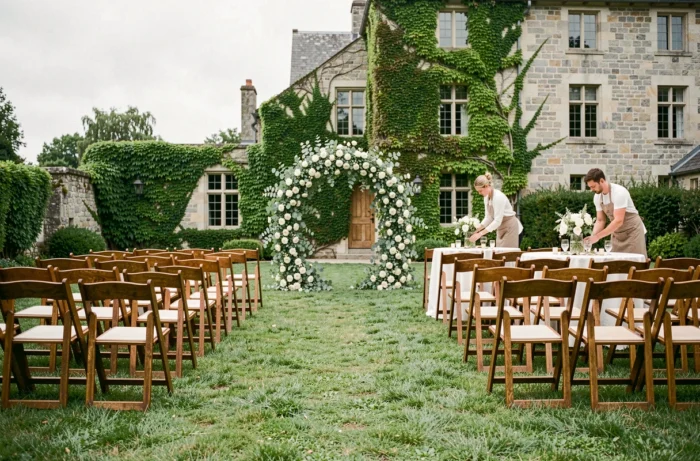
Shared Wedding Financing: Managing Contributions Without Conflict
When the couple assumes the majority of the funding, the question of family contributions becomes delicate. Accepting financial help often implies accepting oversight on certain choices (menu, guest list, venue).
Setting a clear framework from the announcement of the wedding limits misunderstandings. Specifying in writing which item each contribution covers, without leaving any gray areas, protects the family relationship and the coherence of the project. A parent who finances the wine is not meant to arbitrate the choice of the DJ.
The available data does not allow for concluding a single model. However, couples who formalize the financial distribution before signing the first quote report fewer frictions during the months of preparation.
Flexibility on the Big Day: How a Realistic Schedule Changes Everything
A tightly packed schedule on the wedding day is the primary cause of stress identified by photographers and coordinators. Planning buffer slots of 20 to 30 minutes between each key moment (ceremony, cocktail, photo session, meal) absorbs delays without triggering panic.
A common pitfall is scheduling the couple’s photo session in a too-short slot, wedged between the ceremony and the cocktail. The result: the couple rushes instead of enjoying, the photos suffer, and guests wait without a program. Moving this session before the ceremony or during the cocktail, briefing a witness to entertain during the wait, radically changes the experience of the day.
A successful wedding does not rely on a perfect plan. It relies on a plan that tolerates the unexpected. This is the difference between a day endured and a day lived, and it is often the only variable that couples regret not having calibrated better.